Followers

Friday, September 13, 2013

Lovely light reflections on copper

Our dog Lindy waited out on the deck with me while my husband went into the Copper Eagle Bakery to buy lunch. He brought out delicious food and drinks, which added greatly to our enjoyment of a noontime visit to the southern BC town of Greenwood this summer.


 Photos by Richard Schear, July, 2013
Posted for
Weekend Reflections
hosted by James from California. Thanks, James!
Hungry, haunted Toads for Hannah

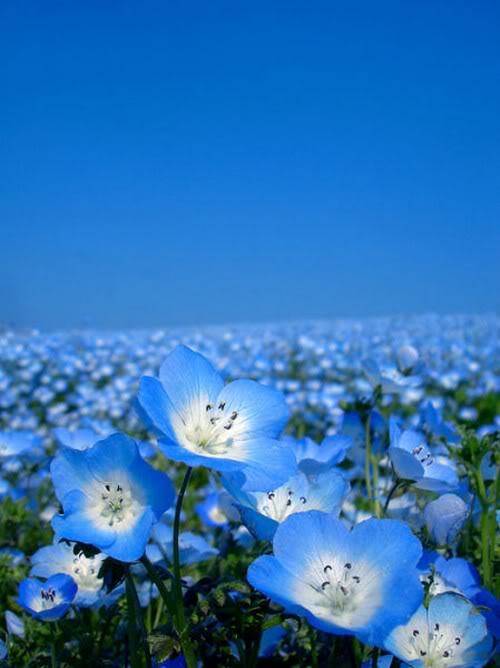
She wanted to encourage our personal muses to be hungry and haunted, so Hannah gave members and visitors to the Imaginary Garden with Real Toads two photos and a video showing acres of colourful flowers in Japan.
The video, with deliciously soothing piano music and changing scenes of people wandering amongst fields of flowers, each field a different colour, made me feel good. I don't know how my muse felt, or how the dog sleeping on the floor behind me feels about it, but I'm going to play that video again, for the fourth time, then happily go to bed.
But first, here are two photos Hannah provided, as well as my response to the prompt.


Soft music, playing on our soul strings.
Warm colour as far as the eye can see,
red and yellow tulips warm the blue
and mingle, every springtime, bounty’s
hue.


Walk slowly ’mid the wide expanse of light,
lie down, or sit. Nothing’s wrong, and all is right,
Hitachinaka, Ibaraki, Ajigaura Beach
coloured light; and light on colour, reach.


A perfectly-tuned and played piano
washed our senses clean so we know
only beauty, only colour, only light,
never darkness, never sorrow, never blight.

Wednesday, September 11, 2013

Count our words for Mama Zen

Over at the Imaginary Garden with Real Toads, Mama Zen has asked us to write about, for, or with the number 8.
Because words really count with Mama Zen, she asks us not to use more than 80 of them per poem.
I wrote what I thought would surely be fewer than 80 words, and it came out to 91. Just a stroke of luck that removing two lines made it 80.


words that count with mama zen
won’t go up to nine or ten
what she wants today is eight
eight or eighty, not eighty-eight

the thing about eight that’s really great
is: lots of words will rhyme with eight

I can write them on my slate
Wikimedia photo, Portugal,
by Adam Jones, Kelowna, BC
or else pile them on my plate
my appetite I soon will sate
if I just think of number eight

let’s go swinging on the gate
or stuff the cats into a crate!

Wikimedia photo of unmanned level crossing, linking Silt Road to Badgeney End, UK.
Photographer Stan Wray recalls hurting his head on this gate when swinging on it as a child.

AMAZING POD OF ORCAS, BC COAST

My sister-in-law sent me this link to a video someone shot from shore on Galiano Island, British Columbia, recently. Galiano is one of the Gulf Islands between the BC mainland and Vancouver Island.
Unfortunately, the audio consists mostly of a woman yelling "Yahoo!" and "Wahoo!" but at least she doesn't say anything that can't be shown to your children and grandchildren. And it really is a great video.
http://www.youtube.com/watch_popup?v=NfyVMWuUQnw

Wikipedia photo
The orca is also known as the killer whale, but they don't hunt humans. That doesn't mean humans don't hunt orcas, however, and the conservation status of the orca is listed as "threatened".


Enjoy this video of a fabulous scene in my home province of British Columbia.
—K

Tuesday, September 10, 2013

The letter "I" is for ichthyology

Wikipedia photos & pictures
I used to know an ichthyologist, but I don't know him any more. If you think there's something fishy about that, you're probably right. Actually, he doesn't know me any more.
Here, for ABC Wednesday, I will have to use a Roger Green approach to posting: full of knowledge, ancient and arcane.

Giant grouper swimming
among schools of other fish


Ichthyology is the branch of zoology devoted to the study of fish. This includes skeletal fish (Osteichthyes), cartilaginous fish (Chondrichthyes), and jawless fish (Agnatha). While a large number of species have been discovered and described, approximately 250 new species are officially described by science each year. According to FishBase, 32,200 species of fish had been described by March 2012. There are more fish species than the combined total of all other vertebrates: mammals, amphibians, reptiles and birds.
Head-on view of

The practice of ichthyology is associated with marine biology, limnology and fisheries science. People who study ichthyology are called ichthyologists.
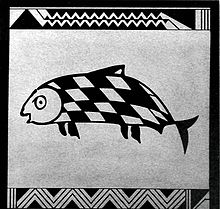
The study of fish receives its origins from human's desire to feed, clothe, and equip themselves with useful implements. According to Michael Barton, a prominent ichthyologist and professor at Centre College, "the earliest ichthyologists were hunters and gatherers who had learned how to obtain the most useful fish, where to obtain them in abundance, and at what times they might be the most available". Early cultures manifested these insights in abstract and identifiable artistic expressions.
Dunkleosteus was a gigantic,
10 meter (33 feet) long
Aristotle incorporated ichthyology into formal scientific study. Between 335 BC–322 BC, he provided the earliest taxonomic classification of fish, accurately describing 117 species of Mediterranean fish. Furthermore, Aristotle documented anatomical and behavioral differences between fish and marine mammals.
The Romans, although less devoted to science, wrote extensively about fish. Pliny the Elder, a notable Roman naturalist, compiled the ichthyological works of indigenous Greeks. Pliny's documentation was the last significant contribution to ichthyology until the European Renaissance.
is a lobe-finned fish which
Lungfish evolved the first
proto-lungs and proto-limbs.
They developed the ability to
live outside a water environment
in the middle Devonian
(397-385 Ma), and have
remained virtually the same
for over 100 million years.

Adventurous individuals such as John James Audubon figure in the faunal documentation of North America

Louis Agassiz of Switzerland established his reputation through the study of freshwater fish and organisms and the pioneering of paleoichthyology.

Ichthyologists...study all types of fish. Since (their work) may require fieldwork, including being in or on the water for long periods of time, physical fitness and a curiosity for nature are important requirements for this profession.
Ichthyologists may work for universities, museums, private companies and government agencies. They study all aspects of fish species, including natural history, behavior, reproductive habits and growth patterns. In addition to their studies, museum ichthyologists may take part in educating the public about fish species and conservation awareness. University scientists primarily conduct research and may also teach courses in ichthyology, marine biology or related areas.


Blue, she says, she wants blue, but...

I have a dearth of blue flowers in my yard. So, for my friend Yamini MacLean's Less Speak, More Peek challenge, I have photos containing blue.

Blue flowers, she said she wanted, and I have a dearth of blue flowers in my yard, but...

...here are some blue Grape Hyacinths. Where they came from and who took the photo, nobody knows, but they're blue.

Blue Alberta sky in the Badlands.

Our grandchildren's dog's puppies, two of them, in a blue bucket.

Pink crabapple blossoms with a pale blue sky behind.

These lilacs seem to start out pink, then take on a bluish tinge when they open.

And blue sky behind white blossoms. Pretty, no?

Kay Davies, photos, except first one, which is unattributed.

Monday, September 9, 2013

Here's what happened in our world

We had our big trees trimmed last week.
First, the men from the tree company cut down some of the smaller branches. These formed a trampoline that the man in the lift aimed for when he threw down the larger branches.


This big piece bounced when it landed, so it is slightly out of focus in the bottom right of this photo. I think I might have bounced a bit myself. I cropped the photo to show the large piece of branch. I really wasn't standing this close. (See top photo.)
Kay Davies photos, September, 2013
Afterward, all the branches, big and small, went into a chipper/mulcher machine that ate them all into small pieces. For safety reasons, the arborists didn't want a silly old woman running around with a camera, so I got these four shots, then went back inside the house where I belonged.
I just went through my archives to see if I could find photos that show the height of the trees hovering over our little hobbit house. I really don't have any that show the full height of either of them, but here are two for-instances.
Branch fell where Lindy naps!

The main reason I wanted the trees trimmed was the big branch that had fallen from one of them. It landed right where our dog Lindy naps during the day. Fortunately, it fell at night, but I didn't want to take any more chances. (The building seen behind the tree is a shed.)


Both trees can be seen in the second photo. They do provide plenty of shade, even shading the cars in the afternoon, but this old photo doesn't show how tall they really are. Our house is small, and not only small, it is low, and I think it is vulnerable. I'm glad the trees were trimmed.

Posted for
Our World Tuesday
Our World is hosted this week by Lady Fi and Oscar. My husband sure wishes our Lindy would swim like Oscar, but she's just not interested.

Crossbreeding can make critters cross


GENETIC  INTERFERENCE

How could they do this to a pig?
The pig on the right is 'way too big,
And covered all over in wild boar hair,
Which, seems to me, is not too fair.

For a pig should be slippery pink
And cool itself by a roll in the mud—
How many baths, what do you think
This hairy pig needs to get rid of mud-crud?


And the poor pig at left
similarly crossbred—
achieved the boar’s nose
and its temper instead.

Scratching the grey pig’s back with a hand
Might be satisfying to pig and to man,
But petting the brown pig 'tween its ears
Would conjure up  nightmarish fears.


However, in waterfowl, crossbreeding doesn't seem to be quite the disadvantage to the critter as it would seem to be in the case of pigs and boars.

Crossing a wood duck (right) with a rosybill (lower right) seems to want to produce a very pretty duck known as Netto Peposaca (bottom, centre).

Posted for

Open Link Monday
at the
Imaginary Garden
with Real Toads


Netto Peposaca and other photos from Wikimedia Commons


Sunday, September 8, 2013

"What a deer family you have there, Bucky," said the magpie.

Hey, Bucky, wait up. I've gotta ask you,
is that your family over there?
 
Wow, yes it is, Maggie. That's my brother's mate and her twins.
I see the little one lower down, on the right. They're such nice fawns.
Well, I think that human over there with the camera
has his eye on them!
I think you're right, Maggie, but here comes my brother!
He's big and strong!
I don't see the twins any more, Bucky,
so they must have moved up there ahead of their mom. 
And Big Brother is watching them,
to make sure they got away safely.
Posted for
Camera Critters
hosted by Misty Dawn. Thanks, Misty!


Saturday, September 7, 2013

Lindy enjoying the sunrise


Lindy is glad the sun came up. She enjoys it and pays no attention to her dad, who is behind her, taking pictures...and not all his pictures are of the sunrise!

Posted for
Pet Pride
hosted by Lindy's friend Bozo
and his family in Mumbai, India

Lindy says, "Hi, Bozo. My dad and I go out for our walk early in the morning because the weather is still very hot. We sometimes see crows, but I don't pay any attention to them any more."

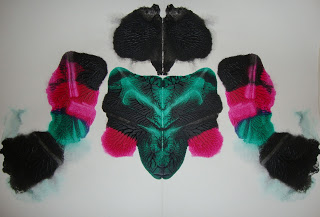
Lolamouse's inkblot challenge for Toads

Lolamouse is spending the whole day in the Imaginary Garden with Real Toads, testing the rest of the toads with Rorschach-style inkblots to see what hidden meanings they have for us.
I am very busy sleeping today, and so is my dog Lindy, so we sent this little black dog to visit Dr. Lolamouse for us. Let's see how he does.

Picture: Portion of painting by Mary Cassat, Wikimedia Commons


hello, doctor lolamouse,
you have such a lovely house,
yes, thank you, I’ll sit on the couch
that chair’s low, I’d have to crouch


I’m here for the Rorschach Test
I hope I pass, I’ll do my best
to see hidden shapes and meanings
in the inkblots you’ve been screening

this one is a redheaded bat
any first-year pup knows that

next one is of jumping rabbits
so predictable, their habits


and the next one’s no surprise
a red-eared wolf with slits for eyes

then we have two kissing fish
close their eyes and make a wish


but the last one is confusing
probably because you’re using
all those colors, Doctor Mouse,
excuse me as I leave your house.


Inkblots provided with prompt by Lolamouse


Friday, September 6, 2013

Fireblossom Friday in Imaginary Garden


THE LOVESTRUCK STRIPPER
Wikimedia
Commons


the lovestruck stripper tried to be 
reincarnated studiously,
in order to impress
the man whom she’d obsessed
upon, unexpectedly.

a very studious prodigy, he
undertook preparatory
politically-correct zookeeping,
alas, the stripper came back, weeping,
still lovestruck, but just a zombie.


Fireblossom Fridays at the Imaginary Garden with Real Toads are always unexpected, and usually fun. Today's was more fun than most. Fireblossom gave us two lists of words: one of adjectives, one of nouns, and asked us to choose one of each for our title, then write a poem about the resulting character.

Fireblossom herself can be more fun than most, as well, and her two lists of words were wonderful to choose from. I couldn't help using many more of them in my poem, as well as the two I used in my title.

Here are FB's two lists:
terrifying
regretful
miniscule
inebriated
envious
reincarnated
obsessive
lovestruck 
studious
unexpected
sherpa
ecclesiastic
docent
incubus
Gypsy
zookeeper
CSI
zombie
stripper
prodigy


What kind of reflection is this?

Richard Schear photo, August, 2013


I won't make you try to guess what this is. As you can see by the license plate, it's a vehicle—the back of a large van with double doors.
I like the way Lindy's wagging tail is reflected, and I laughed at how it made my husband look even slimmer than he actually is. He did lose a lot of weight a year ago, but he isn't this skeletal.
Meanwhile, the other door does nothing to make Lindy look slim, and I'm afraid it wouldn't do much for me, either, so I won't go looking for the vehicle in order to pose behind it.
And the bright light you can see reflected on the right? That's the sunrise. Dick and Lindy go for their walks early in the morning when they can, because the air is cool and fresh.

Posted for Weekend Reflections
hosted by James of California. Thanks, James!


Thursday, September 5, 2013

Blue moon, blue sky at sunrise

Richard Schear, photos, August, 2013
These photos were taken during Dick and Lindy's sunrise stroll last month, when we experienced a "blue moon"...the second full moon of the lunar month.


Posted for
Skywatch Friday